
The life begins with us learning how to talk, learning how to walk and some other basic activities. The proper method of learning things is not specified to us in the schools or by our parents and even if our parents and teachers tell us that you have to memorize something, they usually provide us with methods like repetition and rot learning which is less productive and obsolete. We all know how much learning is necessary to all of us in our life. We all struggle in learning things, especially in schools because we are never told the art of learning which I consider the basic step towards schooling and life. “Better be late than never”. So, let me provide you some of the basics of learning that I learnt from an awesome course on learning which is available on coursera named “Learning How to Learn: Powerful mental tools to help you master tough subjects” offered by McMaster University and University of California San Diego by amazing instructors Dr. Barbara Oakley and Dr. Terrence Sejnowski.
Here we go on the voyage of learning:
1. The lesson of brain modes
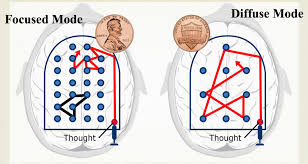
First of all, we need to learn that brain works in two modes namely focused mode and diffused mode. Focused mode is necessary for deep work like solving problems through a method and just uses the fixed neural pathways so we sometimes experience Einstellung (stuck at something). Einstellung refers to a person’s predisposition to solve a given problem in a specific manner even though better or more appropriate methods of solving the problem exist. This happens because the focused mode work does not explore every neuron but works on targeted ones. To solve this, one should take his/her focus out from there. By doing this, one allows the diffused mode of brain to kick in which randomly goes through neurons and could help in solving the problem next time you try to solve it. Diffused mode can be induced through sleep and relaxation. It really works and also makes you more creative. Most of the scientists had their ways of using diffused and focused mode simultaneously.
2. Practice Makes Permanent ?!
It was always told to us that practicing things will fit them into your hipppocampus (brain) and you’ll remember things. Well, that has a technique too. Memorizing has a lot of techniques like spaced repetition, chunking and recalling which are the most effective ones.
:quality(75)/curiosity-data.s3.amazonaws.com/images/content/landscape/standard/05584854-ebc3-4104-95b6-bac549122a23.jpg)
spaced repetition– You don’t need to learn everything up in one day. The memory experts say that we should use the concept of spaced repetition to stick a thing into our mind in which we should revise the thing we want to memorize after one day then after two days then three days and so on (see, the name suggests-spaced repetition). This is scientifically proven to get things inside your long-term memory (A storage house for the brain).
recalling- The people, especially students read things from their notes and see it again to make sure they remember it. They think that they have learnt the thing but in actual world, they have experienced a phenomenon called illusion of competence( Misunderstanding that they have learnt the concept). Now, to prevent this situation, experts suggest recalling i.e. to try and memorize the concept you just read without onlooking the notes or the material from which you have just read. Then, check what the real content was if you had doubts.
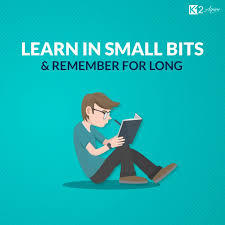
Chunking-
They are several steps to the chunking process. It’s totally simple:
- Break larger amounts of information into smaller units.
- Identify similarities or patterns. (especially in understanding based concepts and related concepts, it really helps.)
- Organize the information.
- Group information into manageable units.
WANNA KNOW MORE ABOUT CHUNKING. CHECK OUT THIS LINK: https://thepeakperformancecenter.com/educational-learning/thinking/chunking/chunking-as-a-learning-strategy/
EXCESSIVE HIGHLIGHTING MAKE LEARNING POOR. (DON’T HIGHLIGHT EVERYTHING)
BONUS

Test Yourself– Testing yourself in real-like test conditions makes you used to it. Whatever examination you’re undertaking, just test yourself. If you have studied a topic, test yourself on topic-wise tests. Studies show that ” One hour of studying is less productive than one hour of undertaking a test”
3. Procrastination and Memory

Procrastination has become normal for most of our lives and is as harmful as small doses of arsenic which slowly degrades the body. The procrastination is the habit of delaying the important work for an unknown time for immediate pleasures. It has become a habit to procrastinate and every bad habit has four elements or stages in it.

- The Cue– The thing, location, time and condition which urges you do what you are habitual to do. (trigger stimulus)
- The Routine– The plan/ritual that you follow after getting tempted by the urge For e.g. A smoker smokes at a certain time (cue). So, smoking is the routine.
- The reward– Every thing that pleasures you immediately makes your body release dopamine (the feel good hormone).
Read this book for understanding the habits. ‘The Power Of Habit:Why We Do What We Do in Life and Business’ by ‘Charles Duhigg’ – https://www.amazon.com/Power-Habit-What-Life-Business/dp/081298160X
So, all you need to do is break the habit and for doing this, you must take away the cue which triggers your routine through will power. Will power is a valuable asset which should be used just to take away the temptation. If you have a bad habit of using your smartphones to kill time then you must put in airplane mode at night so that no notifications (the cue) may tempt you to use it. In this way you can break a bad habit.
4.The fun way to learn things (Memory Palace Techniques)
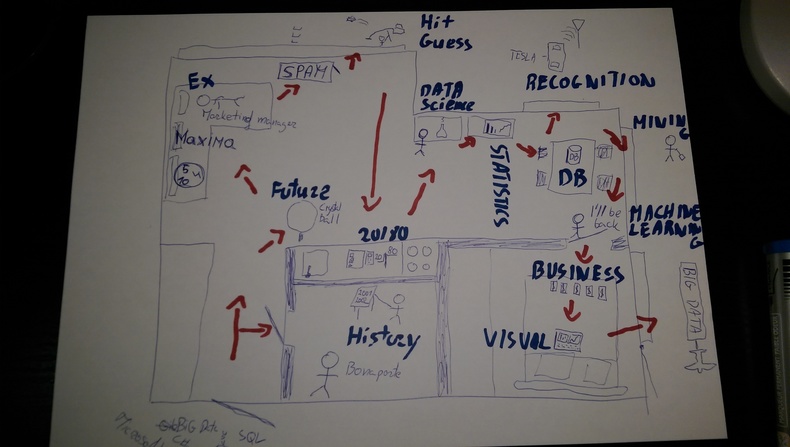
We humans were hunters in the ancient times so we had to be very good with locations and we remember images and stories( our ancestors used to share stories of survival techniques at night) better than words. We remember things that are somewhat logical, unusual (weird). So, the memory experts learn things with techniques like metaphor, analogy, storytelling and visualization.
1.Metaphor: By describing a whole theory by a small word, you can easily relate a complex idea to a word only. This is based on the fact that our brain is good with material things rather than abstract (except emotions) things like formulas and equations. You can also make acronyms to learn stuff.


for e.g. Look at the benzene monkey above, it is so weird but is related to a material thing monkey (quite memorable).
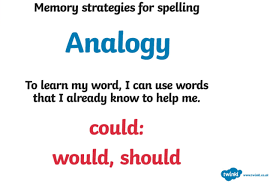
2. Analogy: Relating area of study to your favorite area, so you can remember complex theories. This increases the understanding of concepts and their application. (relating and learning)

3.Storytelling/Visualization: Associating study with your favorite cartoon characters, movies, songs and places. Making story and associating with study material. Even open your mind warehouse and scatter the things you want to learn at a place like your home or school and try walking over that memory palace. For e.g. You can relate famous flight of Wright brothers with your 1st bike journey. There can be scope of lot of creativity to making association.
5. The Pomodoro Technique
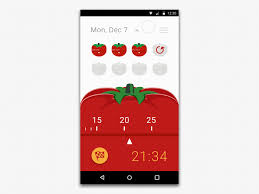
This is a very effective technique that let us ignore the pain that we experience on thinking about doing a boring work. Each time you apply this technique, you are having one Pomodoro cycle.It beats procrastination just through small expenditure of will power. It has two steps:-
- Set a timer ( generally of 25 minutes) to work without distractions (traditionally on chair) and when the timer goes off, take a break of 5 minutes.
- Remember to reward yourself with anything you like (say your favorite cookie) in each Pomodoro cycle. (best way to retain good habits through reward and routine)
You should undergo at least two Pomodoro cycles simultaneously and increase them as you excel in doing so upto your retention limit.
6. Hard -Start Jump-To-Easy(The Test Tips)
Finally, the test is the only thing people are learning for( Maybe!!). So, why not learn how to learn for a test. I have experienced that whether you’re moderately prepared for the exam, you have nailed the course or you haven’t read even a singe word, the night before the exam, you will feel an immense pressure and pain as if that’s the only thing you ever lived for.
Let me tell you, there is a test checklist made by Dr. Fedler ( a professor) for engineering students and works for all students. (Remember this is just to be absolutely sure, not mandatory that without these you cannot score and be confident). Link to the Dr. Fedler’s checklist: http://www.learnlikea.ninja/blog/2018/03/22/richard-felder-study-checklist/
Now, next problem is the method to use during the exam (where to start), some say start from hard questions or start from easy questions. Expert neurologist Barbara Oakley suggests that we should use Hard -Start Jump-To-Easy method.
Firstly, go through every question in the exam paper so that it your diffused mode of brain could work on it in the background. Then, start from the hard questions and if you get stuck on the question, jump to the easy questions so that the brain could could think of an alternate way for that question in the background. (Tip:- Blink your eye for some seconds then try out the question because its hard to identify the error in our own techniques)
At the end, Don’t worry, be confident and an exam is just an opportunity to prove your worth not your life.
7. The Planner Journal

Either you run the day or the day runs you
Jim Rohn
It is true that for most of the things that we do in a day are habits which we do unconsciously. Hence, it is important to plan the day so that you are the one having control of the day.
The steps in making a plan ( A goal without a plan is just a wish):-

- Write the tasks an evening before the day.
- “Eat your frogs in the morning”– It is advised to do all the hectic and boring work in the morning. THE IDEAS ARE FROM THIS BOOK :’Eat That Frog’ by ‘Brian Tracy’-https://www.amazon.com/Eat-That-Frog-Twenty-one-Procrastinating/dp/0792754840
- Make weekly list of key tasks.
- It’s important to have a goal finish time as it is important to plan your day.
- Mix tasks (don’t do one task for prolonged time).
- You can write reviews for yourself like what you should have added or done correctly.
Seek purpose rather than pleasure.
Major Mask


 Major'sDen